
Executive Summary
Indonesia’s Mining sector (excluding Oil & Gas) represents a foundational pillar of the country’s resource-driven economy, supporting global supply chains across energy transition materials, industrial metals, and construction inputs. As one of the world’s largest producers of coal and key mineral commodities such as nickel, Indonesia plays a strategic role in both traditional energy markets and emerging EV supply chains.
Between 2022 and 2024, the sector experienced declining revenue alongside significant normalization in profitability, reflecting a shift from peak commodity cycles to a more stabilized pricing environment. While earlier years benefited from elevated global commodity prices — particularly coal — recent performance highlights a transition toward more sustainable operating conditions.
Despite revenue contraction, profitability trends suggest resilient underlying economics, where margins remain supported by Indonesia’s cost advantages, resource endowment, and downstream processing initiatives. However, earnings compression indicates increasing exposure to global price volatility, regulatory changes, and evolving export policies. Overall, sector performance reflects a post-supercycle adjustment, where growth is increasingly driven by structural demand (e.g., energy transition metals) rather than cyclical commodity price spikes.
Industry Snapshot 2024
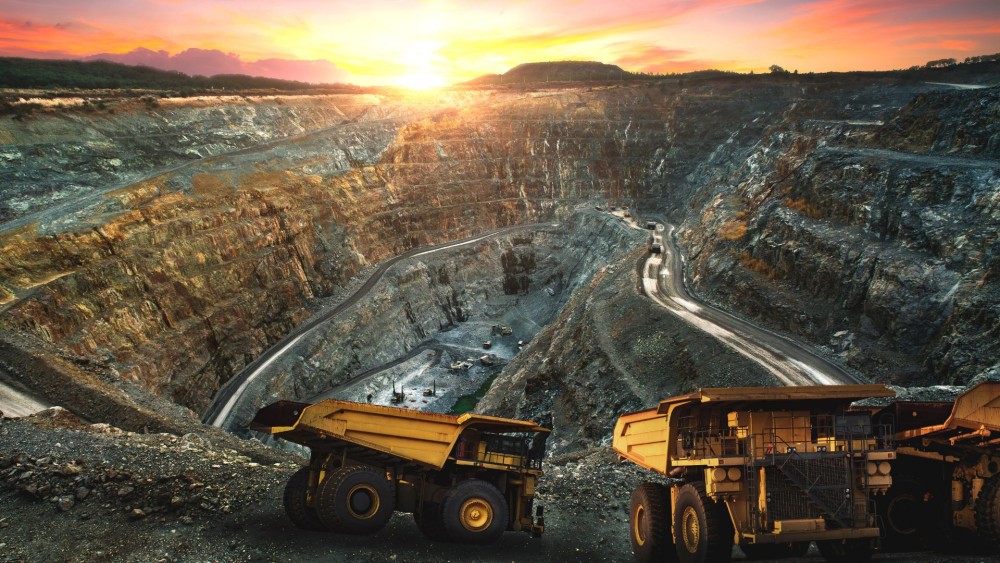
Indonesia’s KBLI 05, 07, 08 — Mining (ex-Oil & Gas) sector includes enterprises engaged in coal mining, metal ore extraction (e.g., nickel, bauxite, copper), and quarrying activities such as stone, sand, and other industrial minerals.
In 2024, the sector generated approximately USD 70.64B in Revenue, representing a Revenue CAGR of approximately –6.4% (2022–2024) . This decline reflects normalization in global commodity prices following the 2022 peak, particularly in coal markets.
Over the same period, Cost of Goods Sold reached USD 38.63B, corresponding to a COGS CAGR of approximately +8.2%, indicating rising operational costs — including energy inputs, labor, and regulatory compliance — despite lower revenue levels .
Profitability indicators highlight a significant compression phase. Operating Profit stood at USD 12.42B in 2024, declining at a CAGR of –30.4%, reflecting reduced margins amid falling commodity prices and cost inflation .
At the bottom line, Net Income reached USD 8.57B, representing a CAGR of –27.7%, indicating that while profitability remains positive, earnings have adjusted materially from peak-cycle levels . As of 2024, approximately 302 companies operate within this segment, suggesting a fragmented yet resource-concentrated landscape, where large mining groups dominate production while smaller operators contribute across regional and niche resource extraction.nvestments.m 114 in 2022, suggesting early-stage consolidation or capital discipline in upstream participation.
Industry Characteristics & Operating Landscape
Where do companies typically operate?
Mining activity in Indonesia is geographically concentrated in resource-rich regions, often aligned with commodity-specific reserves:
• Kalimantan — Major hub for coal mining, supplying both domestic and export markets
• Sulawesi (Central & Southeast) — Key center for nickel mining and downstream processing (EV supply chain)
• Sumatra — Coal and metal ore extraction, supporting both industrial and export demand
• Papua — Large-scale copper and gold mining operations with significant global relevance
Operations are typically located in remote or resource-intensive areas, requiring significant infrastructure investment in logistics, energy supply, and workforce deploymental conditions and long coastlines (~4,600 km), enabling both livestock and aquaculture development at scale.
What drives demand in this sector?
Demand for Indonesia’s mining output is shaped by both global commodity cycles and structural industrial demand.
A key driver remains thermal coal demand, particularly from major Asian economies, although this is gradually influenced by energy transition policies and decarbonization targets.
At the same time, Indonesia’s role in the global EV supply chain is becoming increasingly critical, driven by strong demand for nickel and other battery metals, supported by government-backed downstream industrialization policies.
Domestic demand also plays a role, particularly for construction materials and industrial minerals, driven by infrastructure development and urbanization. However, sector demand remains highly sensitive to global price fluctuations, trade policies, and export restrictions, which can significantly impact revenue and profitability cycles.d to grow at ~24.6% CAGR through 2033, reflecting a shift toward flexible and modular learning.
What defines the operational model?
Mining companies operate under a capital-intensive, asset-heavy model, requiring long-term investment and operational scale.
Revenue streams are primarily generated from:
• Sale of raw commodities (coal, metal ores, industrial minerals)
• Processed and refined materials (increasingly for nickel and downstream metals)
• Export-driven contracts tied to global commodity pricing
Cost structures are dominated by:
• Extraction and processing costs (equipment, labor, fuel)
• Infrastructure and logistics (transport from remote sites to ports)
• Regulatory and royalty payments
• Environmental and sustainability compliance costs
Given the nature of the business, profitability is highly sensitive to commodity prices, with limited pricing power at the firm level — making cost efficiency and scale critical drivers of performance. education, where institutions compete on outcomes, employability, and program differentiation rather than scale alone.
Interpreting 2022-2024 Performance
Sector-wide financial trends between 2022 and 2024 reflect a clear post-commodity-boom normalization phase.
Revenue contraction highlights the cooling of global commodity prices, particularly following the peak demand and supply disruptions seen in earlier periods.
At the same time, rising COGS suggests structural cost pressures, including higher energy prices, wage inflation, and increasing regulatory requirements.
The sharp decline in Operating Profit and Net Income indicates margin compression, as companies adjust from peak profitability levels to more normalized earnings environments.
Overall, the sector demonstrates a transition from price-driven windfall gains to efficiency-driven performance, where long-term value creation increasingly depends on cost control, downstream integration, and exposure to high-growth commodities such as battery metals.in optimizationore’s education industry is moving toward a leaner, more premium, and internationally-driven model.
What This Means for Investors
For investors, Indonesia’s Mining (ex-Oil & Gas) sector offers exposure to both traditional energy commodities and future-facing materials critical to the global energy transition.
Key considerations include:
• Global commodity price cycles and their impact on earnings volatility
• Nickel and EV supply chain positioning, particularly Indonesia’s downstream ambitions
• Regulatory environment, including export bans and domestic processing requirements
• Cost inflation and operational efficiency across mining operations
• ESG and sustainability pressures, increasingly shaping investment decisions
Value creation in this sector is shifting from pure commodity exposure toward integrated, downstream, and efficiency-led strategies, particularly in metals linked to electrification and industrial transformation.
Indonesia’s mining sector therefore represents a strategically important but cyclical investment landscape, where long-term upside is tied to structural demand trends — while short-term performance remains closely linked to global commodity dynamics. with cyclical margin sensitivity and operational complexity.class.asset class.
About Datagent
Datagent is the trusted intelligence partner for company data and insights across Southeast Asia and beyond. We combine firmographics, financials, macro and micro economics into one integrated dataset — helping organizations uncover opportunities, assess markets, and make smarter, data-backed decisions across 11 dynamic economies.
Datagent provides a total of 61 firmographic data fields, comprising 22 non-financial, and 39 financial indicators with coverage spanning 2022–2024.
This report is for informational purposes only and does not constitute financial advice or an invitation to invest. Decisions should be based on independent research and professional consultation to avoid any unintended liabilities.