
MALAYSIA HOTEL INVESTMENT 2026: IS THE MSIC 5510 SECTOR WORTH YOUR CAPITAL?
Understanding whether Malaysia hotel investment represents a viable allocation in 2026 requires moving beyond tourism headlines into the financial operating reality of the MSIC 5510 sector. Malaysia hotel investment analysis using Datagent’s verified financial dataset reveals a sector that generated approximately USD 16.88 billion in revenue in 2024, up from USD 13.36 billion in 2022 – while net profit completed a dramatic turnaround from a loss of USD -0.25 billion in 2022 to USD 1.17 billion in 2024. For institutional investors evaluating Malaysia hotel investment exposure, this is not a marginal recovery. It is a structural shift from post-pandemic survival into a genuinely investable earnings expansion cycle.
The Malaysia hotel investment landscape is being reshaped by three converging forces documented in our Malaysia Short-Term Accommodation (MSIC 5510): 2024 Snapshot: government-backed demand catalysts under Visit Malaysia 2026 targeting 47 million arrivals, sector consolidation reducing active operators from 460 to 377 companies (2022-2024), and policy alignment under PM Anwar Ibrahim’s MADANI economic framework that positions tourism as a national priority sector. The Malaysian Investment Development Authority (MIDA) approved RM736.5 million in hotel and tourism projects in H1 2025 alone – a 31% increase year-on-year (source: mida.gov.my) – signaling institutional confidence in Malaysia hotel investment fundamentals.
1. Malaysia Hotel Investment Fundamentals: Why This Recovery Is Structural
I have spent the better part of a decade advising institutional investors, PE funds, and family offices on what Malaysia hotel investment actually delivers versus what tourism ministry press releases suggest. The common thread across growth equity mandates evaluating Kuala Lumpur hotel investment, sovereign wealth funds sizing Malaysia hospitality market allocation, and infrastructure investors screening hotel real estate Malaysia for yield stability: nearly all arrive with models treating Malaysia’s hotel recovery as a simple tourism rebound. It is not.
Three structural shifts make this Malaysia hotel investment cycle fundamentally different from previous recoveries. First, margin expansion is driven by pricing power rather than volume – hotel RevPAR grew 7.7% to USD 58.30 through October 2025, primarily through ADR increases rather than occupancy gains (source: STR via The Edge Malaysia). To evaluate real asset profitability and multi-dimensional performance metrics in greater depth, review our comprehensive guide on RevPAR dynamics and hotel profitability metrics. Second, sector consolidation eliminated 83 operators between 2022-2024, rationalizing supply and improving pricing discipline among survivors. Third, Malaysia hotel investment benefits from a demand quality upgrade: the luxury tier is projected to grow at 13.74% CAGR through 2031 versus 7.76% for the overall market (source: Mordor Intelligence), indicating a shift toward higher-yield segments.
2. Malaysia Hotel Investment Returns: The Financial Data Behind the Headlines
2.1. MSIC 5510 Financial Performance: Revenue, Margins, and Hotel Profitability Malaysia
| MSIC 5510 Metric | 2022 | 2023 | 2024 |
| Revenue | USD 13.36B | USD 15.64B | USD 16.88B |
| COGS | USD 7.23B (~54%) | USD 7.89B (~50%) | USD 8.46B (~50%) |
| Operating Profit | USD 0.99B | USD 2.01B | USD 2.23B |
| Net Profit | USD -0.25B (loss) | USD 0.95B | USD 1.17B |
| Active Companies | 460 | 439 | 377 |
| Op. Profit Margin | 7.4% | 12.9% | 13.2% |
Dataset Provenance: Aggregated via Datagent Financial Intelligence Platform, Q1 2026. Figures from MSIC 5510 registered companies filed with the Companies Commission of Malaysia (SSM) under the Companies Act 2016. To address information gaps and leverage unlisted private enterprise data effectively, explore our framework on private company data intelligence and SSM record mining.
The COGS ratio stabilizing at approximately 50% is significant for Malaysia hotel investment returns analysis. Unlike manufacturing sectors where COGS consumes 80%+ of revenue, the hotel sector retains substantial gross margin headroom. Operating profit doubled from USD 0.99B to USD 2.23B on only 26% revenue growth – a 125% increase demonstrating the operating leverage that makes Malaysia hotel investment attractive for yield-oriented allocators.
2.2. Hotel Sector Consolidation: What 83 Exits Mean for Malaysia Hotel Investment
The decline from 460 to 377 active MSIC 5510 companies is structurally positive for Malaysia hotel investment positioning. The operators exiting are disproportionately independent, sub-scale hotels unable to compete on distribution costs (OTA commissions averaging 15-20% of room revenue per Mordor Intelligence), brand recognition, or revenue management sophistication.
For Malaysia hotel investment sizing, consolidation creates three value drivers: improved pricing power as supply rationalizes, better bargaining leverage against OTA platforms, and acquisition opportunities for institutional buyers seeking discounted hotel real estate Malaysia from distressed independents. The February 2025 minimum wage increase to MYR 1,700 per month (source: Bank Negara Malaysia) is accelerating this consolidation – budget hotels where payroll exceeds 30% of operating expenses face the sharpest margin pressure, creating potential Malaysia hotel investment entry points at distressed valuations.
3. Political and Geopolitical Context for Malaysia Hotel Investment
3.1. PM Anwar Ibrahim’s MADANI Framework: Tourism as National Priority
Malaysia hotel investment benefits from unprecedented government policy alignment. PM Anwar Ibrahim’s MADANI economic framework positions tourism as a strategic growth sector, backed by RM700 million in Visit Malaysia 2026 promotional spending (source: MOTAC). To capitalize on state-backed infrastructural catalysts and regional expansion nodes, institutional allocators should examine the Visit Malaysia 2026 growth corridors and tourism master plan. The Minister of Tourism, Arts and Culture, YB Dato Sri Tiong King Sing, has explicitly framed hotel development as critical infrastructure for national economic transformation. MIDA’s hotel-specific incentives – Pioneer Status and Investment Tax Allowance for 1-3 star hotel projects, plus Automation Capital Allowance for Industry 4.0 adoption (source: mida.gov.my) – create a fiscal environment that directly subsidizes Malaysia hotel investment returns through tax optimization.
3.2. Geopolitical Tailwinds: ASEAN Centrality and Source Market Diversification
Malaysia’s role as ASEAN Chair in 2025, hosting World Tourism Day in Melaka with the theme ‘Tourism and Sustainable Transformation,’ elevated the country’s tourism profile regionally. For Malaysia hotel investment, this geopolitical positioning creates structural demand advantages. China’s visa-free policy for Malaysian travelers (and reciprocal facilitation) is accelerating Chinese outbound recovery – a critical source market that drove pre-pandemic hotel demand. Middle Eastern investor interest is materializing through projects like Mandarin Oriental Desaru Coast (Johor, rebranding January 2026) and Gulf sovereign wealth fund exploration of KL luxury assets.
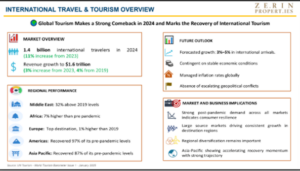
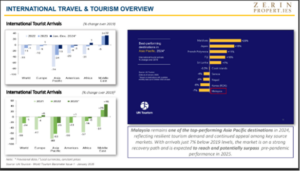
Malaysia recorded 42.19 million visitor arrivals in 2024, an 11.2% increase that made it the most-visited country in Southeast Asia – overtaking Thailand for the first time (source: MIDA/Tourism Malaysia). In Q1 2025, Malaysia welcomed over 10.1 million international visitors, further cementing this position. For Malaysia hotel investment thesis construction, this ASEAN leadership in arrivals provides a structural demand floor that reduces downside cyclicality risk.
3.3. Halal Tourism: A Differentiated Malaysia Hotel Investment Angle
Malaysia’s positioning as the world’s leading halal tourism destination creates a differentiated Malaysia hotel investment opportunity. Muslim-friendly hospitality certification, halal F&B infrastructure, and prayer facility standards are already embedded in Malaysia’s hotel operating culture – a competitive advantage that requires significant investment for competitors like Thailand or Indonesia to replicate. The global halal tourism market is projected to reach USD 230 billion by 2026, and Malaysia hotel investment in halal-certified properties captures a growing segment of Middle Eastern, South Asian, and Southeast Asian Muslim travelers seeking Shariah-compliant accommodation experiences.
4. Malaysia Hotel Investment Risks: What Could Go Wrong
-
Tourism cyclicality and external shocks: Malaysia hotel investment is structurally exposed to demand disruption – pandemics, geopolitical events, and natural disasters directly impact occupancy. The 2020-2021 experience demonstrated this risk: KL luxury occupancy collapsed 58%, ADR declined 17% (source: Horwath HTL). However, the 2022-2024 recovery speed – achieving profitability within 24 months of border reopening – demonstrates the sector’s resilience.
-
OTA commission erosion: Online travel agencies held 57.35% of booking share in Malaysia in 2025, while independent hotels led with 63.32% market share by property count (source: Mordor Intelligence). This structural mismatch – independents dominating supply but OTAs controlling distribution – compresses margins by 15-20% on every OTA-sourced room night. Malaysia hotel investment in branded assets with direct booking capability mitigates this risk. To safeguard net margins against platform fees, operators can leverage advanced hotel revenue management and distribution strategies.
-
New luxury supply absorption: Over 3,600 new rooms from 13 international-brand projects are expected in Kuala Lumpur by 2027, including Park Hyatt at Merdeka 118 (opened August 2025, the tallest hotel in Asia-Pacific), Waldorf Astoria, Conrad, and Jumeirah. While this elevates KL’s global positioning, Malaysia hotel investment in existing luxury assets faces near-term RevPAR dilution until new supply is absorbed.
-
Religious and seasonal volatility: Ramadan impacts Malaysia hotel demand differently across segments – business and MICE travel softens while domestic leisure and religious tourism patterns shift. Eid al-Fitr and Chinese New Year create sharp demand spikes followed by post-holiday troughs. Malaysia hotel investment models must incorporate this multi-religious seasonality pattern, which creates wider occupancy volatility than single-calendar markets like Japan or South Korea
5. Malaysia Hotel Investment Outlook: Where Value Is Being Created in 2026
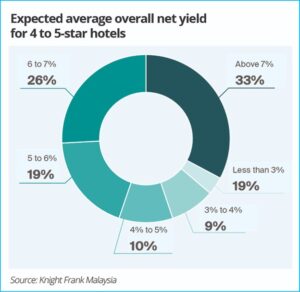
Kuala Lumpur hotel investment captures the deepest demand pool – MICE, corporate, premium leisure – supported by luxury ADR reaching MYR 744 (USD 183.52) in peak months with 68.2% occupancy. RevPAR grew 9.8% in KL through October 2025 (source: STR via IHG/Edge Malaysia). For Malaysia hotel investment at the institutional level, KL branded luxury and upper-upscale assets offer 8-12% unlevered IRR targets with Visit Malaysia 2026 providing 18-24 months of government-backstopped demand visibility.
Johor Bahru represents the most structurally protected Malaysia hotel investment corridor. Singapore proximity drives demand largely decoupled from international tourism cyclicality. The RTS Link rail connection will integrate JB into Singapore’s metropolitan catchment, creating demand upside that most Malaysia hotel investment analyses underweight.
Secondary cities along the ECRL corridor (Kuantan, Kota Bharu, east coast) offer early-stage Malaysia hotel investment opportunities at lower entry valuations with infrastructure-catalyzed demand upside – though requiring longer hold periods and higher execution risk tolerance.
6. Frequently Asked Questions
6.1. Is Malaysia hotel investment a good opportunity in 2026?
Malaysia hotel investment fundamentals are strong: sector revenue grew to USD 16.88B in 2024, net profit recovered from -USD 0.25B to USD 1.17B, and MIDA approved RM736.5M in hotel projects in H1 2025 (+31% YoY). Visit Malaysia 2026 targeting 47M arrivals provides a government-backed demand catalyst. However, Malaysia hotel investment requires selective positioning – branded assets with revenue management capability in KL, JB, and Penang corridors offer the strongest risk-adjusted returns.
6.2. What is the typical ROI on Malaysia hotel investment?
Malaysia hotel investment returns vary by segment. KL luxury RevPAR reached USD 146.18 (MYR 592.45) during peak 2024 months. Sector operating margin improved to 13.2% in 2024. Institutional Malaysia hotel investment targets 8-12% unlevered IRR for stabilized luxury/upper-upscale assets, 14-18% for development-stage projects. The COGS ratio of approximately 50% provides margin expansion headroom that supports Malaysia hotel investment return improvement as pricing power strengthens.
6.3. What government incentives support Malaysia hotel investment?
MIDA provides Pioneer Status (PS) and Investment Tax Allowance (ITA) for new 1-3 star hotel projects and expansion/modernization. Automation Capital Allowance supports Industry 4.0 adoption. Green Technology Tax Incentives cover renewable energy and EV charging infrastructure (source: mida.gov.my). PM Anwar’s MADANI framework positions tourism as a national priority, with RM700M allocated to Visit Malaysia 2026 promotion. These incentives directly enhance Malaysia hotel investment returns through fiscal optimization.
6.4. What are the biggest risks for Malaysia hotel investment?
Four primary risks: (1) tourism cyclicality and external demand shocks, (2) OTA commission pressure eroding margins (57.35% booking share), (3) new luxury supply absorption in KL (3,600+ rooms by 2027 including Park Hyatt Merdeka 118), and (4) minimum wage increase to MYR 1,700 compressing budget segment profitability. Malaysia hotel investment in branded, direct-booking-capable assets with revenue management sophistication mitigates these risks most effectively.
6.5. How does Malaysia hotel investment compare to Thailand and Indonesia?
Malaysia hotel investment offers three advantages over ASEAN peers: Malaysia overtook Thailand as #1 in ASEAN arrivals (42.19M in 2024 vs Thailand’s declining trend), stronger government policy alignment (MIDA incentives, VMY 2026 RM700M commitment), and halal tourism leadership creating differentiated demand from Muslim-majority source markets. Malaysia hotel investment entry valuations are lower than Singapore, with comparable growth trajectories to Bangkok but less oversupply risk. Indonesia offers lower entry pricing but higher regulatory complexity and infrastructure friction.
If your financial model for Malaysia hotel investment is built on generic industry reports, it is likely missing the ground-level data that separates viable opportunities from underperforming assets. Book a 15-minute call with Datagent’s hospitality analytics team to receive a framework calibrated to your specific investment thesis.
Written by: Jey Nguyen, Senior Analyst at Datagent | [email protected]
About Datagent
Datagent is the data intelligence firm built specifically for Southeast Asia, combining company records, on-the-ground market expertise, and modular advisory services into one intelligence stack. Where others offer either raw data or premium consulting, we offer both: customised, cost-efficient, and built by a team that knows this region from the inside.
This content is for informational purposes only and does not constitute financial advice or an invitation to invest. Decisions should be based on independent research and professional consultation.