
Executive Summary
- Thailand’s Support Activities for Transportation sector (TSIC 522) plays a systemically important role within the country’s mobility and logistics infrastructure, supporting aviation networks, cargo flows, and multimodal transport ecosystems. The sector’s recent performance reflects normalization dynamics across regional travel and trade systems rather than broad-based demand acceleration.
- Between 2022 and 2024, financial patterns reveal a distinctive divergence between revenue and profitability trends. While aggregate sector revenue remained broadly stable, earnings indicators improved materially, suggesting that margin expansion and cost normalization — rather than topline growth — were the dominant performance drivers.
- Cost behavior appears to have recalibrated following earlier volatility in global transport activity, with profitability metrics indicating strengthened operating leverage and improved expense absorption. Such dynamics are typical of utilization-sensitive, infrastructure-linked service sectors emerging from demand disruptions.
- Overall, sector evolution points toward earnings normalization and efficiency recovery, reinforcing the importance of throughput stability and cost discipline in shaping financial outcomes.
Industry Snapshot 2024
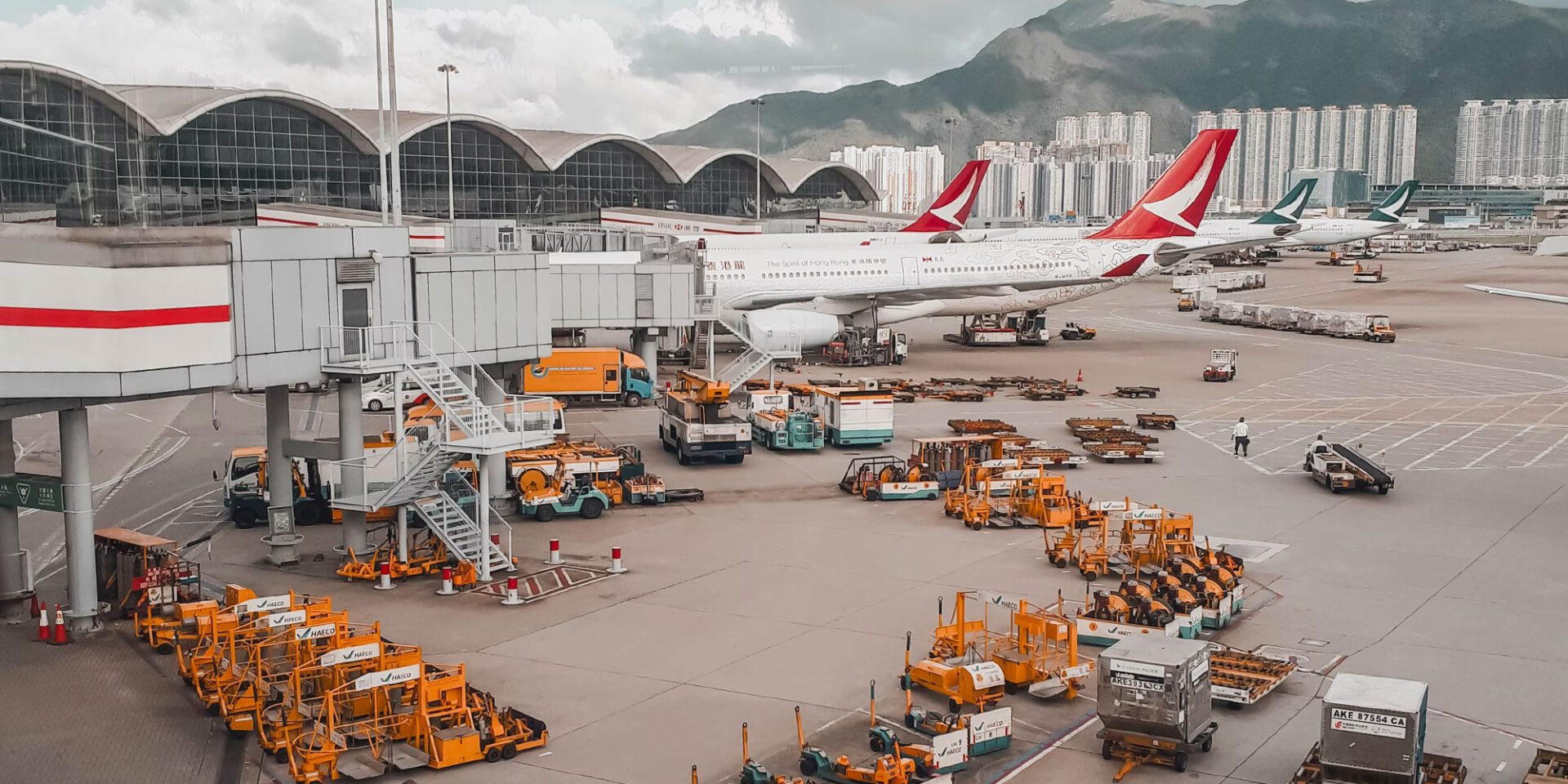
Thailand’s TSIC 522 — Support Activities for Transportation sector encompasses a wide range of infrastructure-linked service providers, including airport operations, cargo handling, freight forwarding, terminal services, and logistics coordination activities. These enterprises function as operational intermediaries facilitating passenger mobility and goods transportation across Thailand’s networks.
In 2024, the sector generated approximately USD 23.0B in Revenue, reflecting a slight contraction with Revenue CAGR of –1.5% (‘22–‘24). Aggregate revenue patterns suggest stabilization rather than expansion, consistent with the sector’s dependence on transport system activity cycles.
Over the same period, Cost of Goods Sold totaled roughly USD 15.7B, corresponding to COGS CAGR of approximately –3.7%, indicating notable cost normalization and improved operating efficiency. The divergence between revenue stability and cost contraction represents a key structural signal within the dataset.
Profitability indicators demonstrate substantial improvement. The sector recorded Operating Profit of approximately USD 3.0B, reflecting Operating Profit CAGR of +28.3% (‘22–‘24). At the net level, Net Profit reached roughly USD 2.2B, corresponding to Net Profit CAGR of +36.1%, highlighting strengthened earnings resilience despite muted revenue growth.
As of 2024, 1,511 companies operated within TSIC 522, underscoring the sector’s breadth and Thailand’s diversified transportation-support ecosystem.
Industry Characteristics & Operating Landscape
Where do companies typically operate?
Support activities for transportation in Thailand are structurally concentrated around the country’s highest-traffic logistics and mobility gateways, where passenger flows, cargo throughput, and multimodal infrastructure converge.
Key concentration centers include:
- Bangkok – Thailand’s primary aviation and logistics nucleus, anchored by Suvarnabhumi and Don Mueang airports, as well as major freight forwarding and logistics coordination activities
- Chonburi / Laem Chabang – The country’s most important deep-sea port and container handling hub, critical for maritime cargo operations and terminal services
- Samut Prakan – Strategic industrial and logistics corridor adjacent to Bangkok, supporting warehousing, distribution, and aviation-linked activities
- Phuket – Major tourism-driven aviation gateway, supporting airport operations and passenger handling services
- Chiang Mai – Northern regional aviation hub with growing passenger and cargo support activity
Geographic concentration is primarily dictated by infrastructure density, cargo volumes, and passenger traffic, rather than population scale alone — a defining characteristic of transportation-support industries.
What drives demand in this sector?
Demand within Thailand’s TSIC 522 — Support Activities for Transportation sector is inherently derived from mobility and trade system activity, rather than independent consumer demand. Sector performance closely tracks passenger volumes, cargo throughput, and overall transport network utilization.
In Thailand, aviation dynamics play a central role. Recovery of international tourism, restoration of flight capacity, and shifts in travel flows directly influence airport operations, ground handling, and passenger service providers. Given Thailand’s strong exposure to inbound leisure travel, demand patterns remain sensitive to regional mobility cycles and seasonality effects.
Cargo and logistics flows form an equally important demand driver. Variations in air freight, maritime trade, and domestic distribution intensity shape utilization levels across cargo handling, terminal services, and logistics coordination activities. As a result, sector growth is fundamentally linked to traffic normalization and throughput stability.
What defines the operational model?
Data processing and hosting industries operate under a capital- and infrastructure-intensive economic TSIC 522 businesses operate under a utilization-sensitive, operations-driven model, where financial outcomes depend heavily on throughput volumes and cost efficiency. Revenues are typically volume-based, tied to passenger handling, cargo activity, or service contracts linked to transport systems.
Cost structures combine fixed operational expenses with activity-linked costs, making profitability highly sensitive to utilization rates. Margin dynamics are therefore driven less by pricing power and more by operating leverage, scale efficiency, and cost absorption.
This structure positions the sector as cyclical yet operationally leveraged, with earnings resilience closely tied to mobility recovery and infrastructure utilization.
Interpreting 2022-2024 Performance
Aggregate sector dynamics over the 2022–2024 period suggest recovery stabilization rather than expansion acceleration. Revenue patterns largely mirror the normalization of global and regional transport systems, while cost contraction signals structural efficiency adjustments.
Improving operating and net profitability indicate enhanced cost absorption and utilization stability, consistent with sectors benefiting from restored passenger and cargo flows.
Overall, sector evolution reflects a transition from disruption recovery toward earnings normalization.
What This Means for Investors
For investors, Thailand’s Support Activities for Transportation sector (TSIC 522) provides exposure to a systemically important infrastructure-support industry closely tied to tourism recovery, logistics flows, and regional trade dynamics.
Key considerations include:
• Sensitivity to passenger and cargo throughput
• Infrastructure utilization stability
• Operating cost efficiency
• Competitive specialization and service mix
• Regulatory and concession frameworks
Value creation within the sector is closely linked to operational efficiency, network positioning, and volume resilience, rather than linear demand assumptions.
Thailand’s transportation support ecosystem therefore reflects the economics of a recovery-normalized service sector, where earnings durability depends on traffic stability and cost management discipline.
About Datagent
Datagent is the trusted intelligence partner for company data and insights across Southeast Asia and beyond. We combine firmographics, financials, macro and micro economics into one integrated dataset — helping organizations uncover opportunities, assess markets, and make smarter, data-backed decisions across 11 dynamic economies.
Datagent provides a total of 61 firmographic data fields, comprising 22 non-financial, and 39 financial indicators with coverage spanning 2022–2024.
This report is for informational purposes only and does not constitute financial advice or an invitation to invest. Decisions should be based on independent research and professional consultation to avoid any unintended liabilities.