
Best Industrial Estates in Indonesia: The 2026 Strategy Guide for Machinery Manufacturers
Choosing the right location is the most critical decision for any best industrial estates in Indonesia strategy. It is a P&L decision that compounds over every quarter your factory operates. Datagent’s analysis of 457 active KBLI 28 machinery manufacturers reveals that firms located within the top-performing manufacturing clusters Java Indonesia report operating margins 8 to 14 percentage points higher than peers operating outside designated industrial estates. That margin delta is not driven by labor cost arbitrage — Java’s industrial wages are broadly convergent across the major corridors. It is driven by infrastructure quality, supply chain density, and the compounding logistics efficiencies that only in the best industrial estates in Indonesia.
1. Why Location Economics Define Machinery Manufacturing Profitability
I have spent years advising institutional investors and industrial corporations on where to deploy capital across Indonesia’s manufacturing landscape. When investors ask about the best industrial estates in Indonesia, the answer is rarely about land price alone. It is the structural advantage — or disadvantage — embedded in your choice of manufacturing clusters Java Indonesia.
Indonesia’s machinery manufacturing sector (KPLI28) generated USD 28.11 billion in revenue in 2024, and the overwhelming majority of that output is concentrated on Java. This is not accidental. Java offers the convergence of port infrastructure, power grid capacity, skilled labor pools, and supply chain networks that capital-intensive manufacturing clusters Java Indonesia require. But within Java itself, the performance dispersion between top-tier and second-tier clusters is dramatic — and it is widening.
2. Best Industrial Estates in Indonesia: A Data-Driven Assessment of Manufacturing Clusters
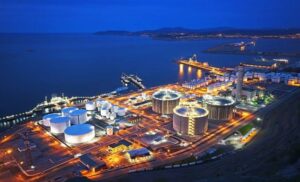
A panoramic view of leading industrial complexes, representing the best industrial parks in Indonesia with internationally standardized power supply and infrastructure.
2.1. The Greater Jakarta Industrial Belt (Jabodetabek)
The Jabodetabek corridor — encompassing Bekasi, Cikarang, Karawang, and Tangerang — often cited as the best industrial estates in Indonesia due to proximity to Tanjung Priok port. Cikarang alone hosts over 4,000 manufacturing facilities across multiple industrial estates, including Jababeka, EJIP (East Jakarta Industrial Park), and MM2100.
Why KBLI 28 firms cluster here: Proximity to Tanjung Priok port (Indonesia’s largest) eliminates the inland logistics premium that erodes margins for manufacturers in Central or East Java. For machinery manufacturers dependent on imported components — which Datagent’s data shows accounts for 40% to 55% of COGS for the average KBLI 28 firm — every additional kilometer from port to factory floor translates directly into higher landed material costs.
| Manufacturing Cluster | Province | Distance to Major Port | Average Industrial Land Price (USD/m²) | Key KBLI 28 Advantage |
| Cikarang (Jababeka/EJIP/MM2100) | West Java | 35 km to Tanjung Priok | 180–250 | Highest supply chain density, component availability |
| Karawang (KIIC/Surya Cipta) | West Java | 65 km to Tanjung Priok | 120–170 | Automotive ecosystem crossover, competitive land |
| Tangerang (Jatake/Millennium) | Banten | 25 km to Tanjung Priok | 150–220 | Airport proximity, distribution hub access |
| Serang/Cilegon (KIEC) | Banten | 15 km to Merak Port | 80–120 | Heavy industry infrastructure, lowest land cost |
| Surabaya (SIER/PIER) | East Java | 10 km to Tanjung Perak | 90–140 | Eastern Indonesia market access, mining sector proximity |
| Semarang (Tanjung Emas) | Central Java | 8 km to Tanjung Emas Port | 60–90 | Lowest labor costs on Java, emerging hub |
Dataset source: Aggregated via Datagent Industrial Intelligence Platform, Q1 2026. Land prices represent median asking rates from industrial estate operators. Port distances measured as road distance to the nearest deep-water terminal.
2.2. The Banten Heavy Industry Corridor
The western approach to manufacturing clusters Java Indonesia is anchored by the Serang-Cilegon industrial zone, which is one of the best industrial estates in Indonesia for heavy machinery manufacturing under KBLI 28240 (mining, quarrying, and construction equipment). The Krakatau Industrial Estate (KIEC) provides direct access to integrated steel production through Krakatau Steel — a critical input for machinery manufacturers whose raw material costs represent 30% to 40% of COGS.
For PE firms evaluating machinery manufacturing targets, the Banten corridor represents a cost-efficiency play. Industrial land prices in the Serang-Cilegon zone (USD 80 to 120 per square meter) are 40% to 55% lower than equivalent-grade plots in Cikarang. However, this cost advantage must be weighed against lower supply chain density and longer logistics routes to Jakarta’s distribution networks compared to other best industrial zones for machinery manufacturing in Indonesia.
2.3. The East Java Manufacturing Hub
The Surabaya-Gresik-Sidoarjo corridor represents the second-largest concentration of manufacturing clusters Java Indonesia, with the Surabaya Industrial Estate Rungkut (SIER) serving as one of the best industrial zones for machinery manufacturing in Indonesia. For KBLI 28 firms serving Indonesia’s mining and agricultural sectors — whose end markets are concentrated in Kalimantan, Sulawesi, and Eastern Indonesia — Surabaya provides a geographic advantage that no West Java cluster can replicate.
Tanjung Perak port in Surabaya handles inter-island cargo routing more efficiently than Tanjung Priok, and shipping times to Kalimantan mining sites are 2 to 3 days shorter from East Java manufacturing clusters Java Indonesia. For machinery manufacturers whose revenue model depends on equipment delivery to resource extraction sites, this logistics differential makes it one of the best industrial zones for machinery manufacturing in Indonesia, directly improving contract competitiveness and cash conversion cycles.
3. What Drives Margin Advantage in These Zones?
3.1. Supply Chain Density and Component Lead Times
Manufacturing clusters Java Indonesia with high supplier density — particularly those recognized as the best industrial estates in Indonesia like Cikarang and Karawang — reduce component procurement lead times from the KBLI 28 sector average of 4 to 6 weeks to 1 to 2 weeks for standard industrial components. This lead time compression directly improves working capital efficiency: less inventory required, shorter cash conversion cycles, and lower warehousing costs.
Our analysis across 457 KBLI 28 firms shows that the top quartile in working capital efficiency — firms with cash conversion cycles under 75 days — are concentrated in the Cikarang-Karawang belt, consistently ranked among the best industrial zones for machinery manufacturing in Indonesia. The bottom quartile — firms with conversion cycles exceeding 120 days — are disproportionately located outside Java’s primary industrial corridors.
3.2. Infrastructure Quality and Utility Cost
Power reliability is a structural differentiator across manufacturing clusters Java Indonesia. Designated industrial estates in West Java and Banten, which represent the best industrial estates in Indonesia, report average power availability above 99.2%, with dedicated substations and backup grid connections. Manufacturing facilities outside industrial estates — particularly in Central Java’s emerging zones — report availability of 95% to 97%, with unplanned outages averaging 8 to 12 hours per month.
For precision machinery manufacturing under KBLI 28220 (metal forming and machine tools), a single unplanned power interruption can damage workpieces mid-production, generating scrap costs of USD 5,000 to USD 20,000 per incident. Over a 12-month operating cycle, the cumulative cost of unreliable power infrastructure in lower-tier clusters, compared to the best industrial zones for machinery manufacturing in Indonesia, can exceed the annual land cost savings.
Comparative infrastructure scorecard across Java’s top 6 industrial zones, benchmarking power reliability, water supply, gas connectivity, and telecoms infrastructure against KBLI 28 operational requirements.
3.3. Labor Pool Quality
Machinery manufacturing under KBLI 28 requires a specific labor profile: CNC operators, precision welders, quality control engineers, and maintenance technicians with industrial equipment experience. The availability of this talent pool varies significantly across manufacturing clusters Java Indonesia, with the highest concentration found in the best industrial estates in Indonesia.
The Cikarang-Karawang corridor benefits from its proximity to Bandung’s technical universities (ITB, Polban) and a multi-decade accumulation of industrial training programs operated by Japanese and Korean OEMs. East Java’s Surabaya corridor draws from ITS (Institut Teknologi Sepuluh Nopember) and the broader Surabaya polytechnic network. Central Java remains the weakest in terms of advanced manufacturing talent availability, which partially explains why manufacturing EBITDA Indonesia trends show lower margin performance from firms in this corridor compared to those in the best industrial estates in Indonesia.
4. Strategic Recommendations for Manufacturing Clusters Java Indonesia Selection
4.1. For Machinery Manufacturers Serving Domestic Industrial Markets
Prioritize Cikarang or Karawang for maximum supply chain density and proximity to the largest concentration of downstream manufacturers. Accept the higher land cost premium (USD 120 to 250/m²) as a structural operating advantage of these best industrial estates in Indonesia, which compounds over time through lower logistics costs, faster component sourcing, and superior workforce availability.
4.2. For Export-Oriented Machinery Manufacturers
Evaluate the Banten corridor (Serang/Cilegon) for heavy machinery or the Tangerang cluster for lighter industrial equipment, as these are often the best industrial estates in Indonesia for export logistics . Port proximity and lower land costs improve your FOB price competitiveness. Ensure your KBLI 28 licensing pathway includes KITE import facility access for duty-free raw material importation.
4.3. For Firms Targeting Mining and Eastern Indonesia Markets
The East Java manufacturing clusters Java Indonesia provide the optimal logistics positioning. Shorter shipping routes to Kalimantan and Sulawesi translate into better contract economics for equipment delivery and after-sales service responsiveness — an increasingly important revenue line for KBLI 28 manufacturers diversifying into recurring revenue models.
If your site selection for KBLI 28 manufacturing is based on land price alone, you are optimizing the wrong variable. Book a 15-minute call with Datagent’s industrial intelligence team to receive a cluster analysis calibrated to your specific machinery sub-sector, supply chain profile, and end-market geography.
5. Frequently Asked Questions about best industrial estates in Indonesia
5.1. What is the best industrial estates in Indonesia?
For general-purpose machinery manufacturing (KBLI 28190), the Cikarang-Karawang corridor in West Java provides the highest supply chain density and workforce availability, making it one of the best industrial estates in Indonesia. For heavy machinery and construction equipment (KBLI 28240), the Serang-Cilegon corridor in Banten offers lower land costs and proximity to integrated steel production. For firms serving Eastern Indonesia’s mining sector, Surabaya’s SIER provides optimal logistics positioning with shorter inter-island shipping routes.
5.2. How much does industrial land cost in Java’s manufacturing zones?
Industrial land prices across Java’s manufacturing clusters range from USD 60/m² in emerging Central Java zones (Semarang) to USD 250/m² in premium West Java estates (Cikarang), which are the best industrial estates in Indonesia. The price premium reflects superior infrastructure, supply chain access, and regulatory convenience. Datagent’s data shows the land cost premium is typically recovered within 18 to 24 months through operating cost savings.
5.3. What infrastructure do KBLI 28 manufacturers need from an industrial zone?
Machinery manufacturers require reliable power, industrial-grade water, natural gas, heavy vehicle access, and telecommunications for Industry 4.0. Premium manufacturing clusters, often regarded as the best industrial estates in Indonesia, provide all five; emerging zones may lack one or more.
Written by: Jey Nguyen, Senior Analyst at Datagent | [email protected]
About Datagent
Datagent is the trusted intelligence partner for company data and industrial insights across Southeast Asia and India. We integrate firmographics, verified corporate financial performance, and localized micro-economic indicators into a single, structured intelligence layer — helping institutional investors, multinational corporations, and strategy consultants mitigate supply chain risk and accelerate investment decisions across 11 dynamic economies.
Datagent delivers a total of 61 core firmographic fields, comprising 22 operational variables and 39 standardized financial indicators, with full historical coverage across 2022–2024.
This report is for informational purposes only and does not constitute financial advice or an invitation to invest.