
Machinery manufacturing permit Indonesia: How to Fast-Track Your 2026 Licensing Strategy
Machinery manufacturing permit Indonesia is the critical first step for any enterprise entering the sector. While government portals present the process for a machinery manufacturing permit in Indonesia as a streamlined digital workflow, Datagent’s intelligence reveals a different reality. Approximately 35% of applicants for a machinery manufacturing permit in Indonesia experience delays of 45 to 90 days due to documentation mismatches. The gap between the published framework and the operational reality of obtaining a machinery manufacturing permit in Indonesia is where investment timelines break.
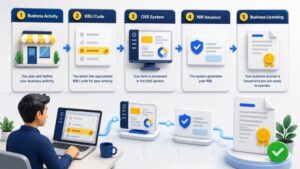
The OSS (Online Single Submission) workflow required to secure your Machinery manufacturing permit Indonesia.
The gap between the published KBLI 28 licensing Indonesia framework and operational reality is where investment timelines break, capital deployment stalls, and market entry windows close. Read our full Industry Snapshot 2024 for a complete sector overview.

1. Why the Machinery Manufacturing Permit Indonesia Matters
I have spent the past eight years helping PE firms, multinational industrial groups, and strategy consultants navigate the regulatory architecture of Indonesia’s manufacturing sectors. When clients ask about the machinery manufacturing sector, the conversation inevitably begins with a general question about “how hard it is to set up.” The answer is nuanced — and the nuance is precisely where the KBLI 28 licensing Indonesia process either accelerates or destroys your market entry timeline.
Indonesia’s machinery manufacturing sector recorded USD 28.11 billion in revenue in 2024. Obtaining a machinery manufacturing permit in Indonesia is not a single action—it is a layered architecture of approvals that must be sequenced correctly. This is a sector with real scale, real capital intensity, and real regulatory complexity. The KBLI 28 licensing Indonesia framework is not a single permit — it is a layered architecture of business identification, sector-specific technical approvals, environmental clearances, and operational certifications that must be sequenced correctly or the entire timeline collapses.
The regulatory landscape shifted materially in 2025. Following the enactment of Government Regulation No. 28/2025, the “Deemed Approval” mechanism intends to accelerate your machinery manufacturing permit in Indonesia, but the implementing regulations for sector-specific technical requirements remain a challenge for those seeking a machinery manufacturing permit in Indonesia. However, the implementing regulations for sector-specific technical requirements under this mechanism have not yet been issued, creating a regulatory gap that sophisticated investors must plan around.
2. Sub-Code Architecture for Your Machinery Manufacturing Permit Indonesia
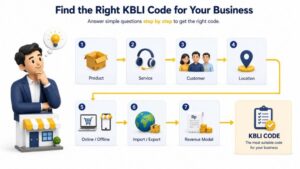
Mapping your core business activities to the correct KBLI code—a foundational step for obtaining a Machinery manufacturing permit Indonesia
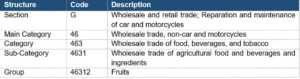
The most expensive mistake when seeking a machinery manufacturing permit in Indonesia is misclassifying your activity. Your machinery manufacturing permit in Indonesia is tied to 5-digit sub-codes.
| KBLI 5-Digit Sub-Code | Description | Typical Licensing Complexity | Foreign Ownership Cap |
| 28110 | Engines and turbines (except aircraft/vehicle) | High — energy sector crossover | 100% (with conditions) |
| 28120 | Fluid power equipment | Medium | 100% |
| 28130 | Pumps, compressors, taps, valves | Medium | 100% |
| 28190 | Other general-purpose machinery | Medium-Low | 100% |
| 28210 | Agricultural and forestry machinery | High — agricultural ministry overlay | 67% (DNI restricted) |
| 28220 | Metal forming machinery and machine tools | Medium | 100% |
| 28230 | Machinery for metallurgy | Medium | 100% |
| 28240 | Mining, quarrying, construction machinery | High — mining sector crossover | 100% (with conditions) |
| 28250 | Food, beverage, tobacco processing machinery | Medium | 100% |
| 28290 | Other special-purpose machinery | Variable | 100% |
Data source: BPS KBLI 2025 Classification cross-referenced with Datagent’s licensing intelligence database.
Selecting agricultural machinery(KBLI 28210) instead of food processing machinery (KBLI 28250) when your actual production involves packaging equipment for food manufacturers does not just create a paperwork inconvenience. It triggers an entirely different regulatory pathway — one that involves the Ministry of Agriculture rather than the Ministry of Industry, carries a foreign ownership restriction of 67% instead of 100%, and requires a separate set of technical certifications. Our platform has tracked three cases in the past 18 months where this single classification error added 4 to 6 months to the KBLI 28 licensing Indonesia timeline and required complete re-submission through OSS.
3. Pathway for a Machinery Manufacturing Permit Indonesia
Strategic timeline for managing regulatory milestones during the Machinery manufacturing permit Indonesia process.
3.1. Layer 1: NIB Registration for Machinery Manufacturing Permit Indonesia
Every pathway for a machinery manufacturing permit in Indonesia begins with establishing a legal entity — either a PT PMA (foreign investment company) or a PT PMDN (domestic company). For foreign investors, GR 28/2025 retains the minimum investment threshold of IDR 10 billion (approximately USD 625,000), excluding land and buildings, for each 5-digit KBLI code. This means a machinery manufacturer operating across two KBLI 28 sub-codes faces a minimum capital deployment of IDR 20 billion before a single machine is installed.
The NIB (Nomor Induk Berusaha) issued via OSS (Online Single Submission) system is the baseline for your machinery manufacturing permit in Indonesia. For standard-risk KBLI 28 activities, the NIB is issued automatically upon submission. For medium and high-risk activities — which includes most heavy machinery manufacturing under KBLI 28240 — additional verification steps are triggered.
3.2. Layer 2: Technical Approvals for Machinery Manufacturing Permit Indonesia
This is where the machinery manufacturing permit in Indonesia timeline often breaks.The Ministry of Industry requires a Standar Industri (Industrial Standard) compliance certificate for machinery manufacturers. The specific standard depends on your sub-code:
For firms producing industrial pumps and compressors (KBLI 28130), the applicable standard is SNI (Standar Nasional Indonesia) certification, which requires physical product testing at an accredited laboratory. This is often impacted by your supply chain localization strategy—see our Machinery Import Data Analysis to understand how import dependency affects your operational timeline. Our data shows that laboratory scheduling alone consumes 30 to 45 days in the Jakarta metropolitan area, with longer wait times in Q1 and Q3 due to annual certification backlogs.
For construction and mining machinery (KBLI 28240), the KBLI 28 licensing Indonesia requirements include a separate Izin Usaha Industri (IUI) from the Ministry of Industry, plus coordination with the Ministry of Energy and Mineral Resources if the equipment is destined for mining applications. This dual-ministry pathway is where the “Deemed Approval” mechanism under GR 28/2025 remains untested — the implementing regulations for cross-ministerial coordination have not been issued.
3.3. Layer 3: Environmental Permits for Machinery Manufacturing Permit Indonesia
Manufacturing facilities above certain production thresholds require an AMDAL (Environmental Impact Assessment) or UKL-UPL (Environmental Management and Monitoring Plan). For machinery manufacturing under KBLI 28, the threshold is typically triggered at production capacities exceeding 5,000 tons per year of finished goods. The AMDAL process adds 3 to 6 months to the KBLI 28 licensing Indonesia timeline. The UKL-UPL pathway is faster (30 to 60 days) but only available for smaller-scale operations.
Location selection directly affects your machinery manufacturing permit in Indonesia. Facilities located within designated industrial zones — particularly in the manufacturing clusters across Java — benefit from pre-cleared environmental assessments and expedited utility connections. Facilities in designated industrial zones benefit from pre-cleared assessments, significantly speeding up the issuance of your machinery manufacturing permit in Indonesia.
4. Compliance Stack for Machinery Manufacturing Permit Indonesia
4.1. Investment Activity Report (LKPM)
Every holder of a machinery manufacturing permit in Indonesia must submit quarterly LKPM reports to BKPM through the OSS system. Failure to file on time is technically grounds for license suspension. In practice, BKPM has issued warning letters rather than immediate suspensions for KBLI 28 licensees, but the compliance burden is real — each LKPM requires detailed reporting of capital realization, employment figures, production volumes, and export-import ratios. Monitoring these filings is a key indicator of firm health; for a deeper dive into performance, refer to our KBLI 28 EBITDA Trends Report.
4.2. Import Facility Access (KITE and IKM)
Machinery manufacturers importing raw materials and components — which includes nearly every KBLI 28 operator given Indonesia’s continued import dependency for high-tech components — need access to customs facilitation schemes. The KITE (Kemudahan Impor Tujuan Ekspor) facility provides duty exemptions for imported inputs used in export production. Securing KITE approval is a separate process from KBLI 28 licensing Indonesia and requires demonstrating a minimum 75% export commitment on the relevant product lines.
5. Strategic Implications for Your Machinery Manufacturing Permit Indonesia
5.1. High-Impact: Pre-Classification Audit
Before initiating your machinery manufacturing permit in Indonesia, conduct a sub-code mapping exercise. Match every planned manufacturing activity to the correct 5-digit KBLI code, verify the applicable foreign ownership thresholds, and identify any cross-ministerial approval requirements. This exercise takes one to two weeks with proper data access and eliminates the 4 to 6 month reclassification risk entirely.
5.2. High-Impact: Industrial Zone Selection
Locating within a designated industrial estate — particularly in the top manufacturing clusters in Java — reduces the KBLI 28 licensing Indonesia timeline by an estimated 60 to 90 days by eliminating the individual AMDAL requirement and providing pre-established utility infrastructure.
5.3. Low-Impact Trap: Relying Solely on OSS Automation
The OSS system is necessary but not sufficient for machinery manufacturing permit in Indonesia. Procurement teams that assume digital submission equals automated approval consistently underestimate the human verification layers embedded in medium and high-risk classification pathways.
The companies operating profitably within Indonesia’s KBLI 28 machinery manufacturing sector — a sector generating USD 28.11 billion in annual revenue — are those that treated the KBLI 28 licensing Indonesia process as a strategic investment. his includes optimizing your plant floor performance—discover how in our Machine Maintenance Efficiency Guide.”
If your KBLI 28 licensing Indonesia strategy is based on the OSS portal documentation alone, you are likely underestimating both the timeline and the cost by 40% to 60%. Book a 15-minute call with Datagent’s regulatory intelligence team to receive a licensing pathway calibrated to your specific KBLI 28 sub-code, ownership structure, and production profile.
6. Frequently Asked Questions about Machinery Manufacturing Permit Indonesia
6.1. How long does it take to get a KBLI 28 license in Indonesia?
The official timeline for KBLI 28 licensing Indonesia through the OSS system is 5 to 10 business days for the NIB issuance. However, the complete licensing stack — including sector-specific technical approvals, environmental clearances, and import facility access — typically requires 3 to 6 months for standard-risk activities and 6 to 12 months for high-risk classifications like KBLI 28240 (mining and construction machinery). The primary variable is whether your facility is located within a designated industrial zone, which can reduce the timeline by 60 to 90 days.
6.2. Can foreign investors own 100% of a KBLI 28 company in Indonesia?
Most KBLI 28 sub-codes allow 100% foreign ownership under current investment regulations. The notable exception is KBLI 28210 (agricultural and forestry machinery), which carries a foreign ownership restriction of approximately 67% under the Daftar Negatif Investasi (Negative Investment List). All foreign-owned KBLI 28 companies must meet the minimum investment threshold of IDR 10 billion per 5-digit KBLI code, excluding land and buildings.
6.3. What is the minimum investment to manufacture machinery in Indonesia?
Under GR 28/2025, the minimum investment threshold for a PT PMA operating under KBLI 28 licensing Indonesia is IDR 10 billion (approximately USD 625,000) per 5-digit KBLI code, excluding land and buildings. A manufacturer operating across two KBLI 28 sub-codes faces a minimum capital requirement of IDR 20 billion. This threshold applies to paid-up capital, not project investment — meaning the capital must be committed and verifiable at the time of NIB issuance.
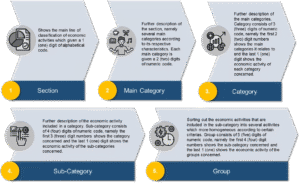
Key compliance indicators for firms holding a valid Machinery manufacturing permit Indonesia.
6.4. What changed with GR 28/2025 for KBLI 28 licensing?
Government Regulation 28/2025 introduced a “Deemed Approval” mechanism applicable to 258 KBLI codes, including several within the KBLI 28 classification. Under this mechanism, license applications not acted upon within the stated SLA window are automatically approved. However, as of Q2 2026, the sector-specific implementing regulations for KBLI 28 machinery manufacturing have not been issued, meaning the practical impact on KBLI 28 licensing Indonesia timelines remains uncertain. Foreign investors should plan around the existing approval timelines until clarity emerges.
6.5. Do I need separate licenses for manufacturing and importing machinery in Indonesia?
Yes. KBLI 28 licensing Indonesia covers the manufacturing activity itself. Importing raw materials, components, or finished machinery requires a separate Angka Pengenal Importir (API) — either API-U (general) or API-P (producer). If you plan to export finished machinery produced with imported duty-free inputs, you also need KITE facility approval, which is a distinct application process through the Directorate General of Customs and Excise.
Written by: Jey Nguyen, Senior Analyst at Datagent | [email protected]
About Datagent
Datagent is the trusted intelligence partner for company data and industrial insights across Southeast Asia and India. We integrate firmographics, verified corporate financial performance, and localized micro-economic indicators into a single, structured intelligence layer — helping institutional investors, multinational corporations, and strategy consultants mitigate supply chain risk and accelerate investment decisions across 11 dynamic economies.
Datagent delivers a total of 61 core firmographic fields, comprising 22 operational variables and 39 standardized financial indicators, with full historical coverage across 2022–2024.
This report is for informational purposes only and does not constitute financial advice or an invitation to invest.