
THAILAND REITs VS. PRIVATE DEVELOPER INVESTMENT: A TSIC 68 SUB-SECTOR ANALYSIS
Understanding the real performance divergence between thailand reits and private developer investments is critical for any investor structuring real estate finance Thailand exposure in 2026. Published comparisons frame REIT vs private developer Thailand as a simple liquidity-versus-control tradeoff. However, Datagent’s Q1 2026 TSIC 68 sub-sector analysis reveals differences that span risk structure, return composition, asset quality, and fundamentally different cycle exposure – making thailand reits and direct developer participation fundamentally different economic propositions.
Thailand’s Thailand REITs framework – regulated by the SEC under the Securities and Exchange Act B.E. 2535 – has grown significantly since replacing the legacy property fund Thailand (PFPO) structure. As of 2024, over 30 SET listed thailand reits manage diverse portfolios. Meanwhile, private developers within the TSIC 68 real estate classification numbered approximately 2,667 companies in 2024 – as documented in our Thailand Real Estate Sector (TSIC 68).
1. Thailand REITs vs. Private Developers: The Structural Framework
I have spent the better part of a decade advising institutional investors on the mechanics of real estate capital markets Thailand SET offers. Pension funds evaluating passive real estate investment Thailand via thailand reits allocations. PE GPs weighing co-investment alongside private developers. Multi-family offices deciding between thailand reits vs direct property investment Thailand. The recurring mistake: treating thailand reits and private developers as substitutable assets on the same risk-return spectrum. They are not.
| Dimension | Thailand REITs | Private Developer |
| Income Source | Rental (90%+ distributed per Thai REIT 90% distribution rule) | Property sales + rental + management |
| Return Type | Yield-dominant: Thai REIT dividend yield 3-7% | Capital gain-dominant: 8-18% target IRR |
| Risk Profile | Lower vol, interest rate correlated | Higher vol, property cycle correlated |
| Liquidity | Daily (SET listed REITs Thailand) | Multi-year lock-up (3-7 years) |
| Leverage | Capped at REIT leverage limit Thailand 35% of assets | Unregulated (varies by structure) |
| Governance | REIT regulations Thailand SEC oversight | Negotiated, JV-dependent |
| Foreign Access | Unrestricted (foreign investor Thailand REIT access) | Restricted (FBA, 49% condo quota) |
Dataset Provenance: Compiled via Datagent Capital Markets Intelligence Platform, Q1 2026. Thai REIT dividend yield ranges reflect trailing 12-month distributions; IRR ranges reflect observed private developer co-investment returns.
2. TSIC 68 Sub-Sector Analysis: Where Thailand REITs Compete
2.1. Office and Commercial Real Estate: REIT Portfolio Thailand Dominance
Thailand REITs dominate Bangkok’s Grade A office market. For investors seeking commercial exposure, passive real estate investment Thailand via REIT portfolio Thailand diversification offers immediate access across multiple buildings and tenants. Private developer entry into this TSIC 68 real estate classification sub-sector requires USD 20-50 million minimum equity and multi-year development timelines, making Thai property REIT investment the more capital-efficient access point. For deeper insights into urban commercial planning constraints, review our analysis on Bangkok Zoning Regulations and Land Use Limits.
2.2. Industrial and Logistics: Industrial Thailand REITs vs. EEC Development
This is where REIT vs private developer Thailand comparison is most nuanced. Industrial REIT Thailand FTREIT and similar vehicles delivered strong Thai REIT dividend yield performance in 2024, driven by manufacturing relocation demand. However, private developer participation in new EEC development offers capital appreciation that REIT structures (limited to stabilized income assets) cannot capture. The optimal approach: bifurcated allocation pairing industrial REIT Thailand yield with private development upside.
2.3. Residential: Private Developer Territory & Thailand REITs Limits
REIT regulations Thailand SEC restrict investment to income-generating assets, excluding for-sale residential development from Thailand REIT performance 2024 2025 results. This means listed vs unlisted real estate Thailand comparison in the residential sub-sector is developer-only. Investors seeking residential exposure must participate through direct development or JV structures. To evaluate operational efficiency in this space, see our cluster on Analyzing EBITDA Margins of Thai Developers for residential margin dynamics.
2.4. Hospitality and Tourism: Thailand REITs Seasonality
Hospitality REIT Thailand vehicles offer Thailand real estate exposure through hotel and resort assets. However, Thai REIT dividend yield in this sub-sector is highly seasonal and sensitive to tourist arrivals. The 7.2% year-on-year decline in foreign arrivals in 2025 compressed hospitality REIT Thailand distributions. Private development in resort assets carries 12-18% IRR potential for well-located Phuket and Koh Samui projects.
3. When Is Thai Property REIT Investment Better Than Private Developer Exposure?
3.1. Capital Size: Below USD 5M, Thailand REITs Win
For allocations below USD 5 million, passive real estate investment Thailand via Thailand REITs is the only viable diversified option. Private developer co-investments require USD 2-5 million minimum per deal, and adequate REIT portfolio Thailand diversification through private channels requires USD 15 million or more.
3.2. Hold Period: Thailand REITs vs Direct Property Investment Liquidity
If quarterly liquidity or monthly NAV reporting is required, SET listed REITs Thailand are the only appropriate structure. Private developer investments require 3-7 year holds. The property fund vs REIT Thailand comparison also favors REITs for investors needing flexibility – legacy property fund Thailand structures carry even longer lock-ups.
3.3. Return Target: Thai REIT Dividend Yield vs. Development IRR
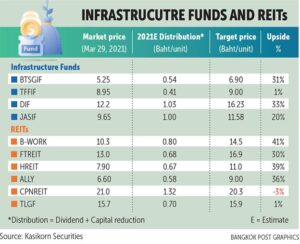
Thai REIT dividend yield of 3-7% satisfies income mandates. Capital appreciation targets of 12-18% require private development or value-add strategies. The Thailand REIT performance 2024 2025 record shows REITs underperforming development-stage returns but with dramatically lower volatility.
3.4. Foreign Access: Foreign Investor Thailand REITs Advantage
Foreign investor Thailand REIT access is unrestricted – SET listed REITs Thailand are listed securities with no foreign ownership caps. This makes Thailand REITs the lowest-friction entry point, avoiding Foreign Business Act restrictions that constrain direct listed vs unlisted real estate Thailand participation. Evaluate withholding tax implications under double taxation agreements alongside our core Foreign Investor Legal Entry Framework.
4. Frequently Asked Questions
4.1. Is Thai property REIT investment better than private developer investment?
Neither is categorically better. Thailand REITs deliver income-dominant returns (Thai REIT dividend yield 3-7%) with daily liquidity and REIT regulations Thailand SEC oversight. Private developers offer 8-18% target IRR but require multi-year lock-up. REIT vs private developer Thailand decisions depend on your capital size, hold period tolerance, return target, and operational involvement appetite. Many institutions use combined allocations.
4.2. How are Thailand REITs regulated?
REIT regulations Thailand SEC mandate: REIT leverage limit Thailand 35% of total assets, Thai REIT 90% distribution rule for net income annually, independent REIT manager oversight, and regular asset appraisals. These protections make passive real estate investment Thailand via SET listed REITs Thailand structurally safer than unregulated private developer co-investments.
4.3. What is the TSIC 68 real estate classification?
TSIC 68 sub-sector analysis covers Thailand’s Standard Industrial Classification for real estate activities: buying, selling, leasing, and managing property assets. The TSIC 68 real estate classification spans residential, commercial, industrial, and mixed-use segments. Understanding this framework is essential for comparing Thailand REIT performance 2024 2025 data with private developer returns across sub-sectors.
4.4. Can foreign investors buy Thailand REITs?
Yes. Foreign investor Thailand REIT access is unrestricted because SET listed REITs Thailand are listed securities with no foreign ownership limitations. This is the lowest-friction real estate capital markets Thailand SET entry point for cross-border investors seeking Thailand real estate exposure without navigating Foreign Business Act restrictions.
4.5. What is the typical Thai REIT dividend yield by segment?
Thai REIT dividend yield ranges: office REITs 4-6%, industrial REIT Thailand FTREIT and peers 5-7%, retail REITs 4-6%, hospitality REIT Thailand 3-5% (highly seasonal). Thailand REIT performance 2024 2025 showed industrial and logistics REITs delivering the most consistent yields, while hospitality REIT Thailand distributions were compressed by the tourism slowdown.
If your financial model for Thailand real estate is built on generic industry reports, it is likely missing the ground-level data that separates viable opportunities from underperforming assets. Book a 15-minute call with Datagent’s real estate analytics team to receive a framework calibrated to your specific investment thesis.
Written by: Jey Nguyen, Senior Analyst at Datagent | [email protected]
About Datagent
Datagent is the trusted intelligence partner for company data and industrial insights across Southeast Asia and India. We integrate firmographics, verified corporate financial performance, and localized micro-economic indicators into a single, structured intelligence layer – helping institutional investors, multinational corporations, and strategy consultants mitigate supply chain risk and accelerate investment decisions across 11 dynamic economies.
Datagent delivers a total of 61 core firmographic fields, comprising 22 operational variables and 39 standardized financial indicators, with full historical coverage across 2022-2024.