
Executive Summary
Vietnam’s Transportation Equipment Manufacturing sector (VSIC 30) represents a specialized yet strategically important segment within the country’s broader industrial ecosystem, covering shipbuilding, rail equipment, aerospace-related manufacturing, and other non-automotive transport equipment.
Between 2022 and 2024, the sector experienced moderate contraction in revenue alongside improving operating efficiency, reflecting a transition from project-driven volatility toward more controlled cost structures. While topline softened slightly, profitability resilience indicates early signs of operational discipline and selective demand recovery.
Despite these improvements, the industry remains capital-intensive and cyclical, with performance highly dependent on infrastructure investment cycles, export demand, and public sector projects. Overall, the sector is gradually shifting toward efficiency-led stabilization rather than aggressive expansion, with consolidation emerging as a defining trend.
Industry Snapshot 2024
Vietnam’s VSIC 30 sector includes enterprises engaged in the manufacture of ships, railway equipment, aircraft components, military vehicles, and other transport equipment beyond traditional automotive production.
In 2024, the sector recorded approximately USD 30.01B in Revenue, reflecting a slight decline vs. 2023 (USD 30.87B) and 2022 (USD 31.14B). This indicates softening demand or project timing effects, typical of heavy industrial sectors.
Cost structures remain substantial, with Cost of Goods Sold at USD 26.42B (~88% of revenue), highlighting the high material, labor, and engineering intensity of production.
Profitability trends show relative stability:
- Operating Profit reached USD 2.05B, broadly flat vs. 2023
- Net Profit stood at USD 0.91B, slightly lower YoY but still above 2022 levels
The sector comprised approximately 2,107 companies in 2024, down from 2,257 in 2023, suggesting ongoing consolidation and competitive rationalization.
Overall, while revenue growth remains under pressure, the sector demonstrates improving operational resilience, with profitability less volatile than topline performance.
Industry Characteristics & Operating Landscape
Where do companies typically operate?
Transportation equipment manufacturing is typically concentrated in industrial and coastal hubs, where access to logistics infrastructure and heavy industrial ecosystems is critical.
Key clusters include:
- Northern region (Hai Phong, Quang Ninh): Shipbuilding, heavy industry, export-oriented manufacturing
- Southern region (HCMC, Dong Nai, Ba Ria–Vung Tau): Supporting industries, mechanical engineering, and logistics integration
- Central region (Da Nang, Quang Nam): Emerging hubs linked to port infrastructure
Operations are closely tied to ports, industrial zones, and export corridors, reflecting the sector’s reliance on large-scale logistics and international trade flows. Managing these complex supply chains often requires a robust logistics tech stack vietnam to maintain efficiency and cost visibility.
What drives demand in this sector?
Demand for transportation equipment manufacturing in Vietnam is shaped by a combination of public investment cycles, export demand, and industrial upgrading trends.
A key driver is infrastructure development, including rail, maritime, and defense-related investments, which generate large, project-based orders. Continued progress in Vietnam transport infrastructure 2026 will be pivotal in sustaining this momentum.
Export demand also plays a critical role, particularly in shipbuilding and mechanical components, as Vietnam integrates deeper into global manufacturing supply chains. The country’s positioning within “China+1” strategies is gradually supporting localized production of industrial components and transport-related equipment.
At the same time, there is a growing push toward industrial modernization and supporting industries, with transportation equipment benefiting from spillover demand from sectors such as energy, construction, and logistics.
However, demand remains lumpy and cyclical, influenced by government budgets, global trade conditions, and capital expenditure cycles.
What defines the operational model?
The sector operates under a capital-intensive, project-based model, where revenue visibility and profitability are closely tied to contract pipelines.
Revenue is typically generated through large-scale manufacturing contracts, often with long production cycles and milestone-based payments.
Cost structures are heavily weighted toward:
- Raw materials (steel, components)
- Skilled labor and engineering
- Machinery and fabrication processes
- Compliance and quality standards. Adherence to strict Vietnam manufacturing compliance requirements remains a non-negotiable factor for operational success.
With limited pricing flexibility, companies rely on scale, project execution efficiency, and cost control to sustain margins.
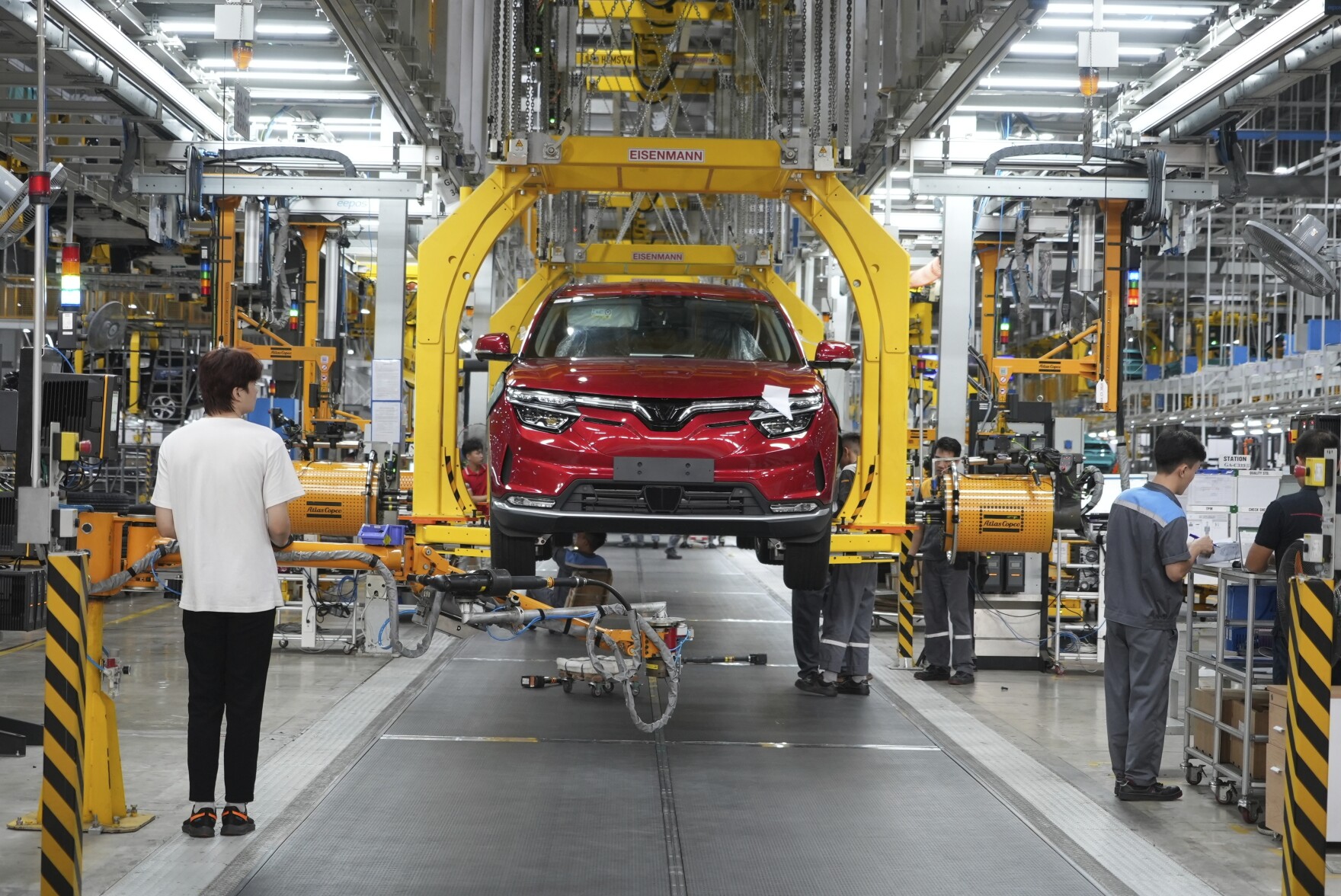
Increasingly, firms are investing in automation, precision engineering, and Industry 4.0 capabilities to enhance productivity and competitiveness, aligning with broader manufacturing transformation trends.
Interpreting 2022-2024 Performance
Sector-wide financials between 2022 and 2024 highlight a transition phase marked by declining revenue but stabilizing profitability.
The gradual decline in revenue suggests cooling demand or normalization after peak project cycles, while consistently high COGS underscores the sector’s structural cost intensity. High port logistics costs vietnam 2026 often contribute to these cost pressures, necessitating closer coordination with reliable major trucking companies vietnam to mitigate supply chain inefficiencies.
Notably, Operating Profit remained relatively stable despite revenue contraction, indicating improved cost management and operational discipline.
The decline in the number of companies further signals market consolidation, where smaller or less efficient players are being phased out amid increasing competition and capital requirements.
Overall, the sector is evolving toward a more mature, efficiency-driven structure, with reduced volatility in profitability compared to previous cycles.
What This Means for Investors
For investors, Vietnam’s VSIC 30 sector offers exposure to a strategic industrial segment linked to infrastructure, trade, and industrial upgrading.
Key considerations include:
- Cyclicality of demand driven by infrastructure and public investment
- Capital intensity and execution risk in large-scale projects
- Supply chain integration and localization capabilities
- Exposure to global trade dynamics and export markets
- Ability to adopt advanced manufacturing technologies
Value creation is increasingly tied to operational excellence, project execution capability, and positioning within global supply chains, rather than pure volume expansion.
Vietnam’s transportation equipment manufacturing sector therefore presents a selective, execution-sensitive investment landscape, where long-term upside is anchored in industrialization trends, while short-term performance depends heavily on project pipelines and cost control discipline.
About Datagent
Datagent is the trusted intelligence partner for company data and insights across Southeast Asia and beyond. We combine firmographics, financials, macro and micro economics into one integrated dataset — helping organizations uncover opportunities, assess markets, and make smarter, data-backed decisions across 11 dynamic economies.
Datagent provides a total of 61 firmographic data fields, comprising 22 non-financial, and 39 financial indicators with coverage spanning 2022–2024.
This report is for informational purposes only and does not constitute financial advice or an invitation to invest. Decisions should be based on independent research and professional consultation to avoid any unintended liabilities.